Three Methods, Three Different Jobs
"Laser marking" is not a single process. It is an umbrella term for several distinct techniques, each producing a different kind of mark with different durability, depth, and cost characteristics. For industrial safety identification — asset tags, valve labels, equipment serialisation — three methods come up repeatedly: laser bonding, fiber laser marking, and laser etching.
Choosing between them is not really a question of which is "best". It is a question of matching the marking method to what the tag actually has to survive in service.
Laser Bonding
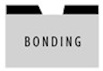
Laser bonding is an additive process. A marking medium is applied to the metal surface, then a high-power laser beam fuses that medium permanently to the substrate. The result is a high-contrast, high-resolution mark that sits at — and slightly into — the metal surface, with no significant material removal from the part itself.
Mark depth typically reaches up to about 0.5 mm, depending on the substrate and the bonding agent. Because the metal underneath is not significantly altered, laser bonding is well suited to applications where the structural integrity or surface finish of the tag matters.
Where it shines
- Serial numbers, model codes, and unique identifier (UID) marking
- Bar codes and QR codes for scan-based asset tracking
- Long-life identification tags exposed to harsh environments
The defining property of bonded marks is their durability. Independent industry testing has consistently shown that bonded marks on stainless steel survive prolonged contact with most common industrial chemicals — solvents, acids, bases, fuels — as well as boiling water immersion and cryogenic exposure with no observable degradation. The mark generally outlasts the surface finish of the tag itself.
Fiber Laser Marking
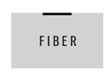
Fiber laser marking uses a concentrated laser beam to alter the surface chemistry or oxidation state of the substrate, producing a lasting mark without the additive medium used in bonding. The beam targets a precisely controlled area, allowing high-quality, high-contrast marks on virtually any metal surface.
Mark depth is comparable to laser bonding (up to roughly 0.5 mm), though most fiber laser marks are shallow surface alterations rather than penetrating the metal in the way bonding does. The marks are fade-proof, water-resistant, and largely unaffected by temperature extremes, and they will not run or smear over time.
Where it shines
- General-purpose industrial marking on metals and some engineered plastics
- Image and logo reproduction where colour fidelity is not required
- Bar codes and high-volume serialisation on consistent substrates
Fiber laser is the everyday workhorse of industrial laser marking — fast, flexible, and capable of handling a broad range of materials with the same equipment.
Laser Etching
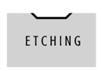
Laser etching is a subset of laser engraving in which the very high-energy beam heats the substrate surface to its melting point. The material expands and forms a raised cavity, producing a tactile mark that you can both see and feel.
Etching produces shallower marks than bonding or fiber methods — typically up to about 0.025 mm in depth. The trade-off is a different visual character: etched marks read as physically reshaped surfaces, with a distinctive raised-edge profile, rather than as the high-contrast colour difference of bonded or fiber marks.
Where it shines
- Decorative applications such as customised jewellery
- Marks where tactile feedback is desirable
- Materials where colour-change marking is impractical
Etching is less common in heavy industrial safety identification because the shallow, surface-only nature of the mark makes it more vulnerable to mechanical wear over time than bonded or fiber alternatives.
Side-by-Side Comparison
| Property | Laser Bonding | Fiber Laser | Laser Etching |
|---|---|---|---|
 |
 |
 |
|
| Mechanism | Bonds an additive medium permanently to the substrate | Alters substrate surface to create high-contrast mark | Melts the surface to form a raised, reshaped mark |
| Maximum depth | Up to ~0.5 mm | Up to ~0.5 mm | Up to ~0.025 mm |
| Best for | Serialisation, UIDs, bar codes, harsh-environment tags | General marking, images, bar codes, mid-volume runs | Tactile or decorative marks, jewellery |
| Chemical resistance | Excellent — survives most industrial solvents and acids | Good — fade-proof and water-resistant | Limited test data for industrial exposures |
| Wear resistance | High — minimal effect from light abrasion or scratching | Good | Moderate — shallow profile is more wear-prone |
What the Durability Testing Tells Us
Independent industry testing of bonded marks on stainless steel has examined a range of exposures relevant to industrial safety identification. Across these tests, bonded marks have demonstrated a consistent picture:
- Organic solvents — gasoline, acetone, ethanol, mineral spirits, motor oil, methyl ethyl ketone, and similar solvents produce no observable effect on bonded marks even after a week of immersion.
- Strong acids and bases — concentrated sulfuric acid, nitric acid, hydrogen peroxide, sodium hydroxide, and ammonium hydroxide produce no observable effect on the mark even when the underlying steel begins to dissolve. Hydrochloric acid is the notable exception: while the mark itself remains intact, prolonged exposure dissolves enough of the steel substrate beneath it that the mark becomes physically raised relative to the receding surface.
- Temperature extremes — boiling water immersion for an hour produces no effect; immersion in liquid nitrogen produces no effect; heating in a propane flame until the metal glows discolours the surrounding steel but leaves the bonded mark visible.
- Mechanical scratch testing — under controlled load, bonded marks remain unaffected at loads that lightly to moderately scratch unmarked steel. Heavier loads progressively degrade the mark, but always after the bare metal itself has begun to scratch.
The headline takeaway: in the kind of harsh chemical and temperature environments typical of offshore, marine, and heavy industrial sites, the failure mode for a bonded mark is almost never the mark itself. The substrate fails first.
Choosing a Method
For most industrial safety identification — asset tags, valve labels, equipment plates, hazardous-area identification — laser bonding is the default specification. The combination of high contrast, deep mark, and exceptional chemical and mechanical durability makes it well-suited to environments where the tag may live for decades and may face conditions the original specifier never anticipated.
Fiber laser marking is the right call where bonding is overkill — for indoor industrial applications, tags that are not exposed to aggressive chemicals, or high-volume runs where speed matters more than maximum durability.
Laser etching is generally a poor fit for industrial safety applications, but excellent for the decorative and tactile use cases where its raised-mark character is the desired result.
The simplest specification rule: pick the method whose worst-case durability comfortably exceeds the worst-case environment your tag will see. The cost difference between methods is small compared to the cost of an unreadable tag at the moment someone needs to read it.